
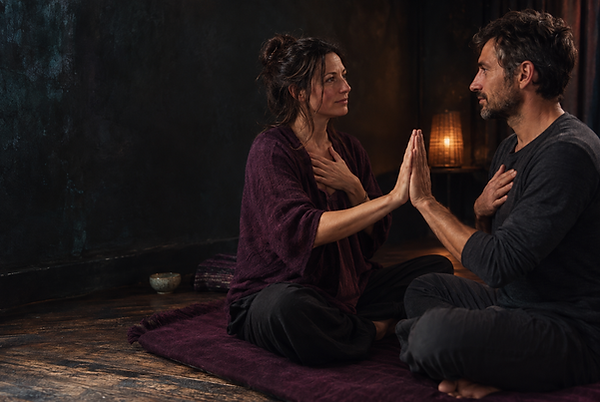

Sacred intimacy practitioners create supportive, consent-led experiences that bring together emotional connection, body awareness and conscious touch.
Through breath, communication and embodied exploration, they help people deepen their relationship with intimacy, pleasure and themselves.
Sacred Intimacy Practitioners.
Presence, Connection & Conscious Intimacy.
What is a Sacred Intimacy Practitioner?
A sacred intimacy practitioner supports people in exploring intimacy, sexuality, pleasure and connection through a conscious, embodied and often spiritually informed approach.
The word sacred does not necessarily refer to religion. It describes an intention to approach the body and sexuality with presence, care and personal meaning, rather than shame, performance or expectation.
Sessions may combine conversation, breath, movement, meditation, sensual awareness, personal ritual and consent-led touch. Approaches vary considerably, so practitioners should explain clearly what they offer and whether touch or nudity may form part of their work.
What does a Sacred Intimacy Practitioner do?
A practitioner creates a supportive space in which you can slow down, become more aware of your body and explore how you experience closeness, pleasure and vulnerability.
A session might involve discussing desires and boundaries, practising conscious communication, using breath or movement to develop body awareness, or exploring sensation without pressure to reach a particular outcome. Some practitioners offer carefully negotiated touch, while others work entirely through conversation and guided exercises.
Everything should be agreed with you, with the freedom to pause, change direction or withdraw consent at any time.
Why might someone explore Sacred Intimacy?
Sacred intimacy may appeal if you want to:
-
Reconnect with your body, sensuality or sexuality
-
Explore intimacy at a slower and more conscious pace
-
Develop confidence expressing desires and boundaries
-
Question shame or limiting beliefs around pleasure
-
Become more comfortable receiving touch or attention
-
Bring greater presence and meaning into a relationship
-
Explore the emotional or spiritual dimensions of intimacy
-
Reconnect with yourself during a period of personal change
You do not need to follow a particular spiritual tradition. What matters is whether the practitioner’s language and approach feel meaningful and comfortable to you.
How does it differ from other practices?
Sacred intimacy overlaps with several forms of intimacy and body-based work. Intimacy coaching generally focuses on communication, relationships and practical change, often without touch.
Sexological bodywork usually follows a more structured educational model, while tantric practice draws specifically from traditional or contemporary interpretations of Tantra.
Sacred intimacy may borrow from these approaches, but places particular emphasis on presence, personal meaning and treating intimacy as part of the whole self, physical, emotional, relational and sometimes spiritual.
Because there is no single standard method, two sacred intimacy practitioners may work in very different ways.
What should you look for in a practitioner?
Ask about the practitioner’s training, experience and professional boundaries, as well as what actually happens during a session. They should be open about touch, clothing, nudity, confidentiality, fees and the limits of their role before you book.
Consent should be specific and ongoing. Spiritual ideas should never be used to override boundaries, discourage questions or suggest that discomfort is necessary for growth. Be cautious of anyone promising guaranteed healing, transformation or relationship outcomes.
The right practitioner should make you feel respected and able to say yes, no or not yet without pressure. The experience should always honour your autonomy and your own understanding of what intimacy, and what is sacred, means to you.
Find a Sacred Intimacy Practitioner →